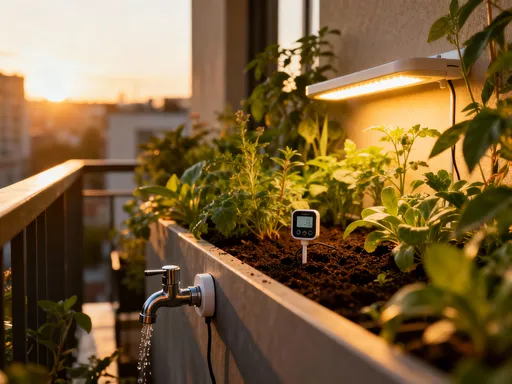
I turned my chaotic balcony into a self-watering garden with just three smart gadgets
You know that moment when you forget to water your plants—again—and come home to drooping leaves? I’ve been there. My balcony used to be a stress spot, not a sanctuary. But everything changed when I added simple smart tools that actually work with my lazy habits. No tech expertise needed. Just real, everyday fixes that made plant care effortless. Now my balcony thrives, even when I’m busy or away. Let me show you how small tech steps brought big peace—and how you can do it too.
The Balcony That Stressed Me Out (Not the Other Way Around)
There was a time when stepping onto my balcony didn’t bring calm—it brought guilt. I’d see the basil I’d bought with such hope, now brown at the edges, or the lavender that had given up entirely. I’d bought plants to add life and beauty to my little outdoor space, but instead, they became silent judges of my inconsistency. Between school drop-offs, work deadlines, and the endless to-do list, watering plants was always the first thing to fall through the cracks. And when I did remember, I’d often overdo it—drenching the soil one day and forgetting the next. Sound familiar?
I wasn’t alone in this. So many of us dream of a green, peaceful retreat just outside our kitchen door. We imagine sipping tea among thriving herbs, watching bees visit blooming flowers, or harvesting fresh mint for summer drinks. But reality hits hard when life gets busy. I’d come back from a weekend trip to find a sad collection of wilted stalks and dry pots—what I jokingly called my “plant graveyard.” Each dead plant felt like a personal failure. I’d think, If I can manage a household, why can’t I keep a few plants alive? That frustration stayed with me until I realized the problem wasn’t me—it was the system. I was trying to fit plant care into a life that didn’t leave room for daily rituals. What I needed wasn’t more willpower. I needed a little help—something that could adapt to my rhythm, not the other way around.
That’s when I started wondering: what if technology could be the quiet helper I never knew I needed? Not something flashy or complicated, but simple tools that quietly took over the parts of plant care I kept dropping. I wasn’t looking to turn my balcony into a lab. I just wanted it to survive—and maybe even thrive—without me needing to be perfect.
Why Going “Smart” Felt Scary (And Why I Tried Anyway)
I’ll be honest—my first instinct was to roll my eyes at the idea of “smart” garden gadgets. I pictured clunky devices, confusing apps, and gadgets that would probably stop working after a month. I didn’t want to spend my evenings troubleshooting Wi-Fi signals for a tomato plant. And let’s not even talk about the price tags I’d seen online—some of them made me gasp. I thought, This is for people who have time and money to spare, not someone like me. I associated smart tech with complexity, not simplicity.
But then a friend showed me her balcony. It was lush, full of healthy herbs and colorful flowers, and she admitted she was gone most weekends visiting family. “How?” I asked. She smiled and pointed to a small white gadget stuck in one of her pots. “It tells me when the soil’s dry. And the rest? My watering timer does it while I’m asleep.” No drama. No daily check-ins. Just plants that stayed happy. That moment stuck with me. Maybe smart gardening wasn’t about being a tech expert. Maybe it was about being kind to yourself.
So I decided to try—on my own terms. I set a few rules: no spending a fortune, no complicated installations, and nothing that required me to learn coding or dig into settings for hours. I wanted tools that worked like a good kitchen gadget—simple, reliable, and quietly effective. I started with just one small device, something I could try without commitment. And to my surprise, it worked. It didn’t take over my life. It just made one small part of it easier. That tiny win gave me the confidence to explore more. I realized smart tech wasn’t about replacing me—it was about supporting me. It wasn’t about control; it was about care. And once I shifted my mindset, the whole experience changed.
The First Gadget That Actually Made Sense: Smart Soil Sensors
The first thing I added was a smart soil sensor. I’ll admit, I didn’t know what to expect. Was it going to beep? Send me a text every hour? But when I opened the box, it was surprisingly simple—a small, sleek stick, about the size of a pencil, with a little LED light on top. You just push it into the soil, connect it to an app on your phone, and that’s it. No wires, no batteries to change, no complicated setup.
Here’s how it works: the sensor quietly checks the moisture level in the soil—how wet or dry it is—several times a day. It doesn’t do anything dramatic. It just sends a gentle alert to my phone when a plant needs water. Not a loud alarm, not a pushy reminder—more like a soft nudge. I set it up in my basil pot first. For weeks, I’d glance at my phone and see, “Soil is dry. Time to water?” And for the first time, I knew exactly when to water. No guessing. No overthinking. Just a simple signal that removed all the doubt.
This tiny tool changed everything. I stopped killing my herbs. My rosemary came back to life. Even my fussy mint started growing like crazy. But more than that, it gave me confidence. I wasn’t relying on memory or habit anymore. I had data—quiet, reliable information that helped me care better. And the best part? It’s not just for one plant. I bought a few more sensors and now I use them for everything—my flowering petunias, my little lemon tree in a pot, even the fern that never seemed to get enough love.
Setting it up was easier than I thought. I downloaded the app (it took two minutes), created an account (yes, I grumbled a little, but it was fine), and then labeled each sensor—“Basil,” “Lavender,” “Front Pot.” Now, when I get an alert, I know exactly which plant needs attention. My kids even got excited—they’d say, “Mom, your phone says the basil is thirsty!” It became a little family game. And honestly? It felt good. Like I wasn’t failing anymore. I was just responding to a helpful message. That’s the magic of this gadget: it turns guilt into action, and confusion into clarity.
Automating Watering Without Flooding the Patio: My Timer Story
Once I got the hang of checking soil moisture, I started thinking: What if I didn’t have to be the one to turn on the hose? I loved the idea of consistency—watering at the same time every day, even when I was tired or distracted. But I was nervous. What if I left it on? What if it rained and I forgot to stop it? I didn’t want to come home to a flooded balcony or a water bill that made me cry.
That’s when I discovered the smart watering timer. It’s a small device that screws onto your outdoor faucet, and then your hose attaches to it. From there, you can control when and how long it waters—right from your phone. I set mine to run for 10 minutes every morning at 6 a.m., before the sun got too hot. The plants loved it. The soil stayed evenly moist, and I didn’t have to remember a thing.
But the real game-changer was the weather-based adjustment. The timer connects to local weather data, so if it rains, it automatically skips the watering cycle. I remember one week it poured for three days straight, and I completely forgot to check. But my timer knew. It paused itself. No overwatering. No soggy roots. Just smart, responsive care. I felt like I’d hired a tiny, invisible gardener.
I started small—just one zone, one schedule. I didn’t try to automate everything at once. I tested it for a week, watched how the plants responded, and adjusted the timing. Now, I have two different schedules: one for my herbs, which like less water, and another for my flowering plants, which need a little more. I can even start a watering session remotely—if I’m leaving the house and realize I forgot to water, I just tap my phone and it runs for five minutes. It’s not magic, but it sure feels like it.
This gadget didn’t just save me time. It saved water. I used to water by hand, and I’d either do too much or too little. Now, it’s precise. And that matters—not just for my plants, but for my conscience. I’m using less, and my garden is healthier. That’s a win I can feel good about.
Adding Light Control: When My Balcony Needed a Little Extra
Here’s something I didn’t expect: not every part of my balcony gets great sunlight. One corner is always in shade, especially in the winter. I tried growing seedlings there once, and they just stretched and stretched, pale and weak, reaching for light that never came. I felt bad for them. It was like watching a kid try to read in the dark.
That’s when I added a simple grow light—and paired it with a smart plug. The grow light isn’t fancy. It’s just a full-spectrum LED bulb in a basic stand. But when I plugged it into a smart outlet and set a schedule, everything changed. I programmed it to turn on at 7 a.m. and off at 7 p.m.—giving my plants a full 12 hours of light, even on the gloomiest days. I called it “fake sunrise,” and my kids loved it. “The plants are waking up!” they’d say, peeking out the window.
The smart plug made it effortless. No walking over to turn it on or off. No forgetting to shut it off at night. And the best part? I can control it with my voice. “Hey, turn on the plant light,” and just like that, it’s glowing. I also linked it to my morning routine—when I say, “Good morning,” my coffee starts brewing, the lights in the kitchen turn on, and the grow light switches on too. It’s a small thing, but it makes me feel like my home is working with me, not against me.
This setup has been a lifesaver for starting seeds indoors before transplanting them outside. I’ve grown basil, tomatoes, and even marigolds from seed—all under this little light. And because the timing is consistent, they’re strong and healthy from the start. I’m not fighting nature. I’m just giving it a little boost where it needs it. And that’s what good tech should do—fill the gaps quietly, without making a big deal about it.
How My Family Started Caring—Without Me Begging
One of the most unexpected benefits of going smart? My family actually started helping—with zero nagging from me. I used to be the plant police: “Did you water the herbs?” “Don’t forget the flowers!” It became a source of tension. But once the alerts started coming in, something shifted. My daughter saw the notification on my phone and said, “Mom, the rosemary needs water!” I said, “Great—want to do it?” And she did. Without being asked twice.
Suddenly, plant care became a shared thing. The soil sensor readings turned into a little game—“Let’s check what the plants are saying today.” My son started calling the sensor “the plant doctor.” He’d check the app like it was a vital sign monitor. “Good news, Mom. The mint is hydrated.” We’d laugh, but it was real. They were learning about plant needs, not because I lectured them, but because the tech made it visible and engaging.
The smart timer helped too. I showed them how it worked—how it knew when to water and when to stop. They thought it was cool. “So it’s like a robot gardener?” my daughter asked. “Kind of,” I said. “But we’re the gardeners. It just helps us be better at it.” And that’s the truth. The gadgets didn’t replace us. They invited us in. They made caring feel manageable, even fun.
Now, watering is part of their weekend routine. They check the app, grab the watering can, and take turns. No bribes. No reminders. Just pride. And when we see new growth—tiny green shoots or the first flower—it’s a family celebration. That sense of shared accomplishment? That’s worth more than any gadget. The tech didn’t just save my plants. It brought us closer. It gave us a little project we could enjoy together, without pressure or perfection.
From Survival to Joy: What My Smart Balcony Gave Back
When I look at my balcony now, I don’t see a list of chores. I see life. I see herbs I use in dinner, flowers that attract butterflies, and plants that grow because they’re cared for—not despite being forgotten. But more than that, I see peace. Mornings start differently. Instead of rushing past the sliding door, I pause. I breathe in the scent of rosemary. I notice how the light hits the leaves. I feel proud—not because it’s perfect, but because it’s alive, and I didn’t have to burn out to make it happen.
The truth is, I didn’t transform my balcony with a big renovation or endless free time. I did it with three simple gadgets that worked with my real life. The soil sensor, the smart timer, and the grow light with a smart plug—they didn’t complicate things. They simplified them. They gave me back time, reduced my stress, and helped me care in a way that actually stuck.
And here’s what surprised me most: I didn’t lose control by using tech. I gained it. I’m more connected to my plants now than ever. I notice changes faster. I understand their needs better. I’m not just surviving as a plant parent—I’m thriving. And so is my family. We’ve created something together, something green and growing, in the middle of our busy lives.
If you’ve ever looked at your plants and felt that pang of guilt, I want you to know—you’re not failing. You’re just using an old system in a modern world. And it’s okay to get help. You don’t need to be a tech expert. You don’t need to spend a fortune. You just need one small step. Try a sensor. Add a timer. Give your plants—and yourself—a little support. Because a thriving balcony isn’t about perfection. It’s about peace. It’s about creating a space that gives back, even on the hardest days. And honestly? That’s the kind of tech I can believe in.