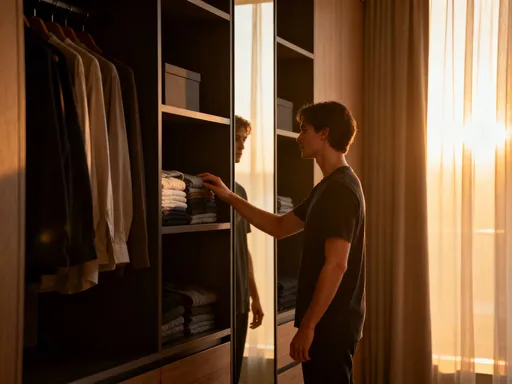
I kept saying 'I’ll organize my closet tomorrow' — this smart wardrobe system finally made it effortless
We’ve all been there — standing in front of a full closet, feeling like we have *nothing to wear*, while clean clothes pile up unworn and forgotten. I used to waste mornings digging through chaos, only to choose the same few outfits on repeat. That changed when I integrated a smart wardrobe management system into my daily life. Over the past year, it quietly transformed not just how I dress, but how I think about space, time, and self-care. It’s not magic — it’s thoughtful tech that works *with* real life. And honestly? It’s given me back something I didn’t even realize I’d lost: peace in the everyday.
The Messy Morning That Changed Everything
It was a Tuesday. My daughter had a school presentation, I had a team meeting at 9:30, and somehow, my favorite blouse was missing. Again. I was standing in my closet, one sock on, the other somewhere under a pile of jeans, when I realized I’d been in this exact spot — emotionally and physically — at least three times that week. The irony wasn’t lost on me: I had more clothes than I’d ever owned, and yet, I felt completely unprepared. I ended up wearing a wrinkled sweater I hadn’t washed in two weeks and apologizing for being late, flustered, before my first Zoom call even began.
That moment hit me harder than it should have. I wasn’t just frustrated about the outfit — I was exhausted by the mental load of it all. The constant decisions, the forgotten items, the guilt over clothes I’d barely worn but still paid full price for. I started to wonder: if my closet was this much of a mess, what else in my life was I just… ignoring? The truth is, clutter isn’t just physical. It’s emotional. It’s the weight of small, repeated failures — I’ll fix it tomorrow, I’ll sort it later — that pile up until they start affecting your confidence, your mood, even your relationships. That morning, I decided I was done making excuses. I needed a system that didn’t just organize clothes, but respected my time and energy.
I didn’t want another complicated app that required me to take photos of every single item or spend hours tagging things. I didn’t want perfection — I wanted ease. I wanted something that would help me stop wasting 20 minutes every morning standing in front of a closet full of options and still feeling like I had nothing. I wanted to stop feeling guilty about my shopping habits. And most of all, I wanted to feel like I was in control — not of my closet, but of my day. That’s when I started researching smart wardrobe systems, not as a tech trend, but as a real-life solution for someone like me: busy, overwhelmed, and just trying to do better.
Finding the Right System: More Than Just Tech
At first, I tried the usual fixes. I downloaded a few wardrobe apps — the kind where you upload photos of your clothes and create digital outfits. Sounds great in theory, right? But in practice, it felt like homework. I’d spend an hour tagging items, only to forget to update it when I bought something new or donated a dress. After a few weeks, the app felt outdated and useless. Then I tried labeling everything with color-coded tags. That lasted about a month until the labels fell off in the wash. I even tried a rotating hanger system — fancy, but it didn’t solve the real problem: I still didn’t know what I owned or what I actually wore.
Then I stumbled on a smart wardrobe system that used RFID tags — tiny, washable labels you attach to clothing that sync with a mobile app. No photos needed. No manual input every time you wear something. The moment I clipped a tag onto my favorite cardigan and scanned it with my phone, it appeared in the app. When I wore it, I just tapped it against a small reader on my dresser — like tapping a transit card — and the system logged it. Over time, it started to learn my habits. It wasn’t just tracking clothes; it was learning *me*.
What sold me wasn’t the tech itself, but how quietly it worked. I didn’t have to change my life for it — it changed to fit mine. The app was simple, with a clean interface and gentle reminders. It didn’t judge me for wearing the same jeans twice in a row. It didn’t shame me for buying another black top. Instead, it helped me see patterns: I wore 20% of my clothes 80% of the time. I had three nearly identical beige sweaters. I hadn’t worn that sparkly dress from my birthday in over a year. That kind of insight? That’s powerful. And the best part? It respected my privacy. No data sharing, no cloud storage I didn’t control. Just a secure, personal tool that stayed between me and my closet.
How It Actually Works: A Day in My Closet
Let me walk you through a typical morning now — the kind that used to stress me out. My alarm goes off. I grab my phone, still half-asleep, and there’s a gentle notification: “Good morning. Light rain expected. Suggested outfit: navy blazer, gray sweater, black ankle boots.” I don’t have to think. I don’t have to debate. The system knows my schedule, the weather, and what I wore yesterday. It even checks if the items are clean — thanks to a small laundry tracker I keep in my hamper.
I head to the closet, and everything I need is already highlighted in the app. I pull out the pieces, get dressed, and before I leave the room, I tap each item against the reader on my dresser. It takes two seconds. That’s it. The system logs what I wore, updates my wear frequency stats, and marks the clothes as “in use” so they don’t show up as available until they’re washed.
One of my favorite moments happened a few months in. I was getting ready for a coffee date, and the app suggested a floral dress I hadn’t worn in weeks. I hesitated — had I worn it recently? I checked the wear log. “Last worn: Tuesday, three weeks ago.” I laughed out loud. It *knew* more about my wardrobe than I did. That’s when it stopped feeling like a gadget and started feeling like a partner — one that remembers the little things so I don’t have to.
And here’s the thing: it’s not about following suggestions blindly. Some days, I ignore them completely. I want to wear the red skirt even if it’s chilly. That’s fine. The system adapts. It learns from my choices, not just my compliance. It’s not rigid — it’s responsive. And that’s what makes it sustainable. It’s not another chore. It’s a quiet helper that makes my life easier without demanding attention.
Beyond Outfit Planning: The Hidden Benefits
I thought the main benefit would be saving time in the mornings. And yes, I’ve definitely reclaimed those 15-20 minutes I used to waste. But what surprised me were the side effects — the quiet, meaningful changes that rippled through other parts of my life. For one, I started wearing more of my clothes. Not just the go-to favorites, but the pieces I’d bought on a whim and forgotten about. The system showed me what I wasn’t wearing, and that sparked curiosity. “Why haven’t I worn this?” I’d ask myself. Sometimes the answer was simple — it didn’t fit well. Other times, it was about context — I bought it for a trip that never happened.
This awareness changed how I shop. Before, I’d see a cute top online and think, “I could wear this with my black pants.” Now, I check my wear history first. How often do I actually wear black pants? How many similar tops do I already own? The data gives me pause — and that pause has saved me hundreds of dollars. I’m not perfect — I still treat myself sometimes — but now it’s intentional, not impulsive.
Another unexpected win? Donating. I used to feel guilty about giving things away — what if I needed them later? But the system showed me exactly what I hadn’t worn in months. I ran a report: “Items worn less than three times in six months.” The list was long. I tried on each one. Most didn’t fit, or I didn’t love them. Letting go felt easier because I wasn’t guessing — I had proof. I donated two large bags last spring, and it felt like a reset. My closet is smaller now, but I wear more of what’s in it. And that’s the real goal, isn’t it? Not more clothes, but more joy from the ones we have.
Making It Work for Real Life — Not Perfection
Let’s be honest: it wasn’t all smooth sailing at first. I forgot to tag things. I left the reader in the laundry room and didn’t log my outfit. I once wore a jacket for three days straight and only remembered to scan it on the fourth. And yes, there was a moment — okay, a few moments — when I felt weirdly judged by the app. “You’ve worn this sweater five times this month,” it seemed to say. “Are you *sure* you need another?”
But here’s what I learned: the system isn’t about perfection. It’s about progress. I adjusted my expectations. I turned off the daily wear reminders because they felt nagging. I set custom alerts — like “Low rotation” for underused items — instead of generic nudges. I even created categories: “Special Occasion,” “Work From Home,” “Weekend Errands” — so the suggestions made sense for my real life, not some idealized version of it.
The biggest shift was letting go of the idea that I had to use it perfectly. Some days, I don’t scan anything. And that’s okay. The system doesn’t break. It doesn’t shame me. It just waits. And when I come back to it, it’s still there, ready to help. That flexibility is what makes it stick. It’s not a strict coach — it’s a gentle guide. And that’s the kind of tech I can live with.
Sharing the System with My Household
When I first started, I thought this was just for me. But my partner noticed how much calmer my mornings were. No more frantic searches, no more sighing at the closet. He asked how it worked — and to my surprise, he wanted to try it too. We set up separate profiles on the same app, each with our own tags and preferences. He’s more minimalist, so his wardrobe is smaller, but he loves the weather-based suggestions. I appreciate the outfit coordination for our family events.
We also linked it to our shared routines. The app syncs with our calendar, so when we have a trip coming up, it generates packing lists based on the forecast and planned activities. No more forgetting jackets or chargers. We even use it for laundry — the system tracks which items are clean, which are in the wash, and when we typically run out of socks (every two weeks, apparently). It’s reduced those little household tensions — “Why are your shirts in my drawer?” — because everything has a place, and the system helps us keep it that way.
It’s also sparked better conversations. We talk more about what we wear, why we wear it, and what we really need. It’s not just about clothes — it’s about values. Do we want more quality, less quantity? Do we care about sustainable brands? The data gives us a starting point. And honestly? It’s brought us closer. We’re not just sharing a closet — we’re sharing a system that supports both of our lives.
A Year Later: How My Relationship with Clothes Has Changed
It’s been a year since I started using the smart wardrobe system. I don’t say “I’ll organize my closet tomorrow” anymore — because I don’t need to. My closet isn’t perfect, but it’s functional. Calm. Mine. I open the doors now and feel relief, not dread. I see clothes I love, that fit, that I actually wear. The chaos is gone. The guilt is gone. And in its place? A quiet sense of control.
I’ve realized something important: how we care for our things reflects how we care for ourselves. When I was constantly fighting with my closet, I was also fighting with my time, my energy, my sense of order. This system didn’t just organize my clothes — it helped me organize my mind. It gave me back small moments of peace in a busy day. It helped me make better choices — not just in fashion, but in how I spend my money, how I treat my body, how I show up in the world.
And maybe that’s the real magic of good tech: it doesn’t draw attention to itself. It doesn’t dazzle you with features. It simply makes life a little easier, a little clearer, a little more intentional. It’s not about having the fanciest gadgets — it’s about finding tools that help you live the life you want. For me, that life includes less stress, more self-awareness, and mornings where I can focus on my kids, my work, my day — instead of my sweater.
If you’ve ever stood in front of a full closet and felt like you have nothing to wear, I get it. I’ve been there. But I also know there’s another way — not through more willpower, not through another closet purge, but through smart, thoughtful technology that works with you, not against you. It’s not about perfection. It’s about peace. And that’s a change worth making.